
Passive Vaping Second Hand Vapour: 2026 UK Risks

Passive vaping carries far lower documented risk than second-hand cigarette smoke, but researchers have not proved it is risk-free. UK guidance finds little evidence of harm to bystanders from brief exposure, while advising people to avoid vaping around babies, children, pregnant people and anyone with asthma, especially in enclosed rooms and cars.
Passive vaping second hand vapour carries far lower documented risks than cigarette smoke, but researchers have not proved zero risk. UK guidance finds little evidence of bystander harm from brief exposure and recommends caution around children and sensitive people. You should treat shared-air comfort and long-term uncertainty as practical reasons to limit exposure.
A vape heats e-liquid instead of burning tobacco. The visible cloud contains aerosol droplets, not harmless water alone. The National Health Service (NHS) recognises the difference between vaping and smoking without calling vaping completely safe. Here is the evidence behind passive vaping second hand vapour in homes, workplaces and shared cars.
Passive Vaping Second Hand Vapour: The Evidence in 2026
Current UK advice describes bystander risk as likely low, not conclusively absent. The NHS finds no evidence so far of harm to people nearby. Action on Smoking and Health (ASH) also distinguishes brief encounters from prolonged indoor exposure. Neither position promises absolute safety in every room or for every person.
The 2022 Office for Health Improvement and Disparities (OHID) review assessed 6 studies of second-hand aerosol exposure. Short exposure produced no detectable biomarker changes in the studies the review discussed. Heavy, sustained exposure sometimes increased nicotine or other exposure markers. The findings describe chemical exposure, not confirmed disease.
What the NHS actually says
The NHS compares e-cigarette aerosol with tobacco smoke and reports far lower likely bystander risk. The NHS still asks adults to avoid vaping around babies and children where practical. You should also respect people living with asthma or other respiratory conditions. Passive vaping second hand vapour needs both the reassurance and the caution.
What current research cannot confirm
Researchers lack enough long-term human studies to identify every outcome of repeated passive exposure. Laboratory measurements show substances entering the air; measurements alone cannot establish illness rates. The 2022 government review also found limited evidence about cardiovascular outcomes for bystanders. You should not translate uncertainty into either proof of danger or proof of safety.
What Passive Vaping Second Hand Vapour Contains
Second-hand aerosol contains tiny liquid droplets and potentially detectable chemicals. E-liquid commonly contains propylene glycol (PG), vegetable glycerine (VG), flavourings and sometimes nicotine. The heating process can also generate small amounts of unwanted compounds. Composition changes with liquid ingredients, device operation and the surrounding space.
Nicotine and aerosol droplets
Nicotine-containing e-liquid can produce exhaled aerosol containing traces of nicotine. People nearby receive a smaller exposure than the user in typical settings. Exposure still depends on proximity, ventilation and how much someone vapes. Passive vaping second hand vapour does not automatically deliver a meaningful nicotine dose to every bystander.
Flavourings, metals and heating by-products
Researchers examine aldehydes, fine particles and trace metals because inhalation exposure deserves careful study. Individual measurements vary across devices and experimental conditions. Laboratory detection cannot tell you the likelihood of a health outcome by itself. Treat a sensational chemical headline as a reason to inspect the measured dose and context.
Why visible clouds cannot measure safety
A large cloud signals an aerosol release, not a specific toxicity level. A small cloud also cannot guarantee clean air. You cannot judge passive vaping second hand vapour solely through smell, flavour or visibility. Instead, assess indoor duration, occupants and the source of the aerosol.
Passive Vaping Versus Passive Smoking
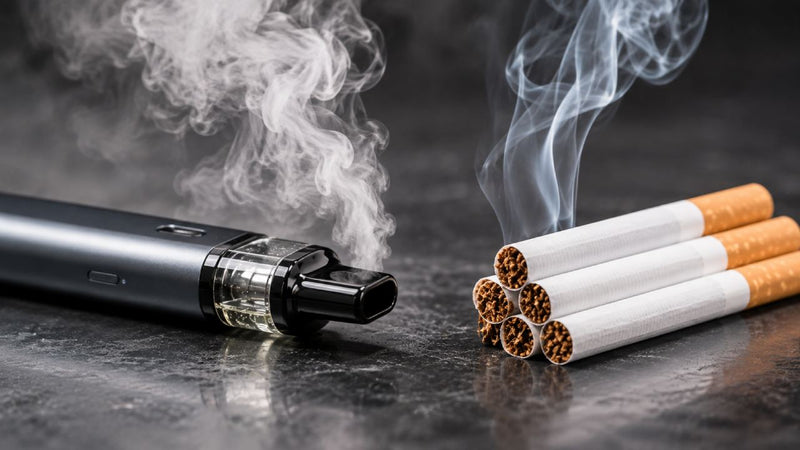
Passive smoking has proven serious health harms; passive vaping has a different and smaller documented risk profile. Cigarettes burn tobacco and release sidestream smoke between puffs. Most e-cigarettes do not produce that continuous burning source. Someone nearby mainly encounters aerosol that the user exhales.
Tobacco smoke contains carbon monoxide, tar and numerous combustion products. Standard e-cigarettes do not create tobacco combustion smoke. However, passive vaping second hand vapour still introduces an avoidable aerosol into shared air. Lower risk does not make the exposure desirable for everyone.
Proven tobacco smoke harm
The NHS links second-hand tobacco smoke with lung cancer, heart disease and childhood respiratory illness. A smoke-free home protects other people from a well-established hazard. Opening a window does not make indoor tobacco smoking safe. You should never use favourable vaping comparisons to downplay cigarette smoke exposure.
Why relative risk matters
A relative comparison asks which exposure carries greater harm. An absolute comparison asks whether any harm remains. Those questions require separate answers, especially with passive vaping second hand vapour. The strongest public-health message supports quitting combustible cigarettes while protecting non-users from unnecessary aerosol.
Short Exposure and Prolonged Indoor Exposure
Exposure duration and indoor conditions change the evidence you should consider. The OHID review separates brief encounters from heavy, sustained exposure. You cannot apply findings from a short test to every repeated indoor scenario. Passive vaping second hand vapour also behaves differently across a spacious hall and a closed vehicle.
Brief encounters in open spaces
Brief encounters generally produce lower aerosol exposure than repeated indoor sessions. Outdoor air disperses exhaled aerosol, although conditions influence how quickly dilution occurs. You should move away when the cloud causes discomfort. Research has not established a universal safe distance for bystanders.
Repeated exposure in enclosed rooms
Sustained vaping can increase measured indoor nicotine or other exposure markers under study conditions. Closed rooms allow occupants to share more of the emitted aerosol. Passive vaping second hand vapour warrants greater caution in bedrooms, compact offices and shared lounges. Evidence on exposure does not automatically establish a chronic disease outcome.
Measurements versus medical outcomes
Air sampling detects particles or substances near a vaping source. Biomarker testing checks whether someone's body absorbed a measurable substance. Medical studies investigate symptoms and disease over time. You need all 3 perspectives before making a confident long-term risk claim.
Children, Pregnancy and Respiratory Sensitivity
Avoid vaping around babies and children, and prioritise people with breathing difficulties. The NHS recommends that precaution even while describing bystander risks as low. People do not share identical sensitivity to airborne irritants. Passive vaping second hand vapour deserves a respectful approach in family environments.
Babies and children
Babies cannot choose another room or describe uncomfortable air. Children also copy adult behaviour. Set a no-vaping rule in rooms that children regularly use. Keep e-liquids and devices out of children's reach to prevent accidental ingestion and other injuries.
Pregnancy and shared spaces
Avoid exposing pregnant people to unnecessary indoor aerosol. Researchers have not established the long-term effects of second-hand vaping during pregnancy. NHS guidance prioritises stopping smoking and recommends professional advice for pregnant people using nicotine. The passive vaping second hand vapour question should not distract from confirmed tobacco smoke harms.
Asthma and other lung conditions
People with asthma can react to irritants without a proven new disease developing. You should respect coughing, wheezing or an immediate request to stop. Avoid vaping in their presence, rather than asking them to tolerate the aerosol. Consult a clinician when symptoms persist or breathing becomes difficult.
Indoor Air Quality and Shared Household Rules
The most reliable household precaution is keeping indoor shared spaces vape-free. Ventilation can disperse aerosol, but no window position guarantees zero exposure. You can reduce conflict through agreed rules before anyone starts vaping. Passive vaping second hand vapour becomes easier to manage when everyone understands the boundaries.
Bedrooms, living rooms and kitchens
Keep bedrooms and children's rooms free from vaping. Ask guests to step outside rather than vape around people who object. Do not rely on air fresheners to remove the source of inhaled aerosol. You should agree on a household policy before visitors arrive.
Air cleaning and ventilation limitations
Open windows can help dilute indoor aerosol, depending on airflow and weather. Portable filtration can capture some airborne particles when equipment suits the room. Neither approach establishes a safe exposure threshold for passive vaping second hand vapour. Removing the source remains the clearer protection for a sensitive occupant.
Cars and other confined spaces
Avoid vaping in a car with passengers, especially children. A vehicle offers less shared air than a typical living room. Air conditioning alone does not settle concerns about repeated aerosol release. Keep car journeys comfortable by choosing a vape-free cabin.
Passive Vaping Second Hand Vapour in UK Public Places
Vaping rules depend on current law and the venue's own policy. UK smoke-free restrictions and e-cigarette controls have not always covered identical activities. Recent legislation also creates powers for future vape-free designations. Check current local rules rather than assuming permission from a previous visit.
Workplaces, venues and transport
Employers and venues can restrict vaping through their own policies. Follow posted rules at offices, restaurants, hospitals and stations. Do not vape beside someone who asks for clean air. Passive vaping second hand vapour remains a workplace etiquette concern even where a specific statutory ban does not apply.
Understanding UK product and conduct rules
Product compliance and permission to vape describe different issues. A lawful nicotine product does not create a right to use it anywhere. You can review UK vaping regulations for background on product standards. Always confirm venue rules independently before using any device.
Three Common Myths About Second Hand Vapour
The evidence rejects both zero-risk claims and claims equating vaping with tobacco smoke. The scientific position requires careful language. Passive vaping second hand vapour can involve detectable constituents without matching cigarette smoke's documented harms. Separate a measured exposure from a proven diagnosis.
Myth 1: Vape clouds are only water
Vape aerosol consists largely of droplets from heated e-liquid ingredients. The cloud is not simply steam from boiling water. Nicotine, flavour compounds and other constituents can appear under relevant conditions. Treat the aerosol as an emitted substance, not as ordinary humidity.
Myth 2: Passive vaping equals passive smoking
Tobacco burning and e-liquid heating create different emissions. Proven smoking harms cannot automatically transfer to vaping at identical levels. Passive vaping second hand vapour still deserves proportionate precautions. You can hold both facts without contradicting medical guidance.
Myth 3: No proven harm means guaranteed safety
The NHS describes current evidence, not a permanent safety certificate. Longer observation can answer questions that short studies cannot. You should distinguish missing evidence from evidence demonstrating no effect. Sensible shared-air rules do not require frightening headlines.
Reading Research Without Media Scares
Check what a study measured, who participated and how long exposure lasted. News reports sometimes collapse different questions into one alarming statement. A laboratory finding about aerosol chemistry is not automatically proof of disease. Likewise, a short negative test cannot settle lifelong exposure.
Study duration and setting
Compare a brief controlled session with continuous indoor exposure before using its findings. Note whether researchers studied humans, animals or aerosol samples. Passive vaping second hand vapour research needs realistic conditions and long-term follow-up. The 2022 OHID review explicitly identified limitations within the available studies.
Outcome, exposure and headline language
Separate a chemical measurement from a symptom report or confirmed medical diagnosis. Ask whether the researchers compared vaping against clean air or cigarette smoke. Those comparisons answer different questions. You should watch for headlines presenting relative safety as complete harmlessness.
Trusted UK evidence sources
Use NHS pages for patient-facing explanations and practical precautions. Read ASH and Cancer Research UK for balanced public-health context. Consult government evidence reviews for study methods and important limitations. Independent cross-checks protect you from exaggerated certainty on either side of the debate.
Practical Actions for Homes, Cars and Workplaces
Choose exposure prevention first, then explain your shared-space expectations clearly. A house rule prevents repeated arguments about how visible a cloud looks. You need no invented distance or time threshold. Passive vaping second hand vapour guidance works best when everyone can follow the same rules.
A quick reference checklist
|
Task |
Timing |
Method |
Difficulty |
|
Keep shared rooms vape-free |
Every day |
Agree on a household no-vaping rule |
Easy |
|
Protect children and babies |
Every encounter |
Ask people to vape outside |
Easy |
|
Support an asthmatic occupant |
Before visits |
Confirm comfort and avoid aerosol exposure |
Easy |
|
Respond to office concerns |
When concerns arise |
Check policy and speak to management |
Easy |
|
Review evidence claims |
Before sharing stories |
Check study design, exposure and outcomes |
Moderate |
You can set a household rule today without purchasing equipment. You can also record concerns before discussing them with a landlord or manager. Adults who vape to stop smoking should seek support before risking a return to cigarettes. The goal combines lower tobacco harm with consideration for non-users.
Clear requests without blame
Ask a visitor to vape outside before entering shared rooms. Explain that someone nearby has asthma, pregnancy concerns or a personal preference for clean air. Offer a defined outdoor area when appropriate. Your request does not require a medical diagnosis to deserve respect.
Device knowledge without unsafe promises
Different devices generate different aerosol patterns, but no device guarantees zero bystander exposure. You can compare common vape devices to understand the terminology. Treat equipment knowledge as background rather than proof that indoor aerosol becomes harmless. Adult non-smokers should not start vaping.
Related on Vape Lounge: Best Vape Kits · Nicotine Free Vape Juice UK
Frequently Asked Questions About Passive Vaping
Is passive vaping harmful to people nearby?
Current UK evidence has not established harm from typical brief exposure. Longer, heavy indoor exposure remains less certain. Avoid vaping near children and sensitive people.
Does second hand vape vapour contain nicotine?
Yes, nicotine can appear in exhaled aerosol from nicotine-containing products. Measured bystander exposure depends on duration and conditions. Detection alone does not establish illness.
Is passive vaping the same as passive smoking?
No. Cigarettes burn tobacco and create harmful smoke. Vapes heat liquid and produce a different aerosol with lower expected bystander risk.
Can vaping indoors affect someone with asthma?
Yes, aerosol can irritate sensitive airways. Avoid vaping around someone with asthma, especially after coughing or wheezing begins. Seek clinical advice for persistent symptoms.
Is vaping allowed inside UK workplaces?
Not automatically. Follow your employer's policy and current local restrictions. Smoke-free law and vaping rules do not always operate identically.
Final Verdict on Passive Vaping in 2026
Low apparent bystander risk is not proof of zero risk. Passive vaping second hand vapour differs from cigarette smoke, and short-exposure evidence offers reassurance. Long-term indoor exposure still needs better research. Respect people who want vape-free shared spaces, especially children and anyone with breathing difficulties. For more evidence-aware guidance, avoid common vaping mistakes through Vape Lounge Online's practical UK information. Do not start vaping if you do not smoke. Passive vaping second hand vapour demands consideration, not fear.