
Best Budget E-Liquids 2026: UK Cost and Safety Guide

The best budget e-liquids cannot be judged on bottle price alone: compare cost per millilitre, UK duty, verified compliance and device compatibility. Since 1 October 2026 the Vaping Products Duty applies by liquid volume, including to nicotine-free shortfills, so check the actual fill volume, your usage and the VG/PG ratio your device needs.
The best budget e-liquids cannot be judged by bottle price alone. Compare cost per millilitre, UK duty, verified compliance and device compatibility before assessing value. Since 1 October 2026, UK vaping duty has added £2.20 per 10 ml (0.34 fl oz), plus VAT, to qualifying liquid. From 1 April 2027 every vaping product on sale must carry a duty stamp, so the last pre-duty stock and prices end then. Nicotine is addictive, and vaping is not risk-free. This guide addresses adult readers who already vape or smoke, without encouraging non-smokers to start.
What makes best budget e-liquids genuinely affordable in 2026?
The useful measure is the complete cost of a compatible, compliant liquid, not an advertised discount. A low sticker price can conceal a smaller fill volume, delivery fees or unsuitable liquid thickness. Compare 3 figures: the price paid, the usable millilitres and the expected amount consumed. Those measurements show why best budget e-liquids cannot have one universal winner.
Which price label provides the fairest comparison?
Pence per millilitre enables comparisons between 10 ml (0.34 fl oz) and 50 ml (1.69 fl oz) containers. Divide the final payable price by the liquid volume actually supplied. Do not divide by the empty bottle's maximum capacity. The number should include compulsory fees and reflect any bundle conditions.
For example, a hypothetical £5.00 bottle containing 10 ml (0.34 fl oz) costs 50p per millilitre. A hypothetical £12.00 bottle containing 30 ml (1.01 fl oz) costs 40p per millilitre. Neither example ranks a product for safety, suitability or quality. Both figures simply describe arithmetic.
Why does usage matter more than the cheapest bottle?
Weekly consumption determines recurring expenditure. A person using 2 ml (0.07 fl oz) daily consumes 14 ml (0.47 fl oz) weekly. Another person using 5 ml (0.17 fl oz) daily consumes 35 ml (1.18 fl oz). Identical bottle prices therefore produce different budgets. Best budget e-liquids comparisons should publish usage assumptions beside price claims.
How did the 2026 UK vape duty change best budget e-liquids?
Vaping Products Duty began on 1 October 2026 at 22p per millilitre. His Majesty's Revenue and Customs (HMRC) applies the duty to covered liquids produced or imported from that date. The duty applies whether liquid contains nicotine or not. A nicotine-free shortfill intended for vaping does not automatically escape duty.
HMRC calculates the liability from actual liquid volume. A 10 ml (0.34 fl oz) quantity attracts £2.20 of duty. A 50 ml (1.69 fl oz) quantity attracts £11.00. A 100 ml (3.38 fl oz) quantity attracts £22.00. Those figures describe manufacturer or importer duty liabilities, not guaranteed retail price increases.
Does VAT make every retail price rise by the same amount?
No. Retail price changes depend on pricing decisions and stock. Standard value-added tax (VAT) generally also applies to the final retail price. A full £2.20 duty pass-through could produce a £2.64 price effect after 20% VAT. Retailers can absorb some costs or change margins. Therefore, no fixed advertised increase applies to every bottle.
Best budget e-liquids guides must distinguish the tax rate from the price customers actually see. A pre-duty comparison dated August 2026 does not establish an October 2026 shelf price. Record the price observation date whenever publishing an example.
Are existing bottles treated differently during the transition?
Production and import dates matter during the transition. HMRC introduced vaping duty stamps with the new duty on 1 October 2026. New qualifying production and imports require duty compliance. Earlier stock can remain subject to transitional treatment. Unstamped pre-duty stock can be sold until 31 March 2027; from 1 April 2027 every vaping product sold or supplied in the UK must carry a valid duty stamp.
You should not interpret every unstamped October 2026 bottle as counterfeit. Equally, you should not assume an unusually cheap offer complies with applicable duties. Read the current HMRC guidance before publishing an absolute claim about stock legality.
Which e-liquid formats change the real cost comparison?
Bottle format changes convenience, usable volume and compatibility. UK guides commonly compare 10 ml (0.34 fl oz) nicotine salts, freebase liquids and nicotine-free shortfills. The 3 categories serve different device requirements. A best budget e-liquids comparison needs the device and intended use identified.
How do 10 ml nicotine salt bottles differ?
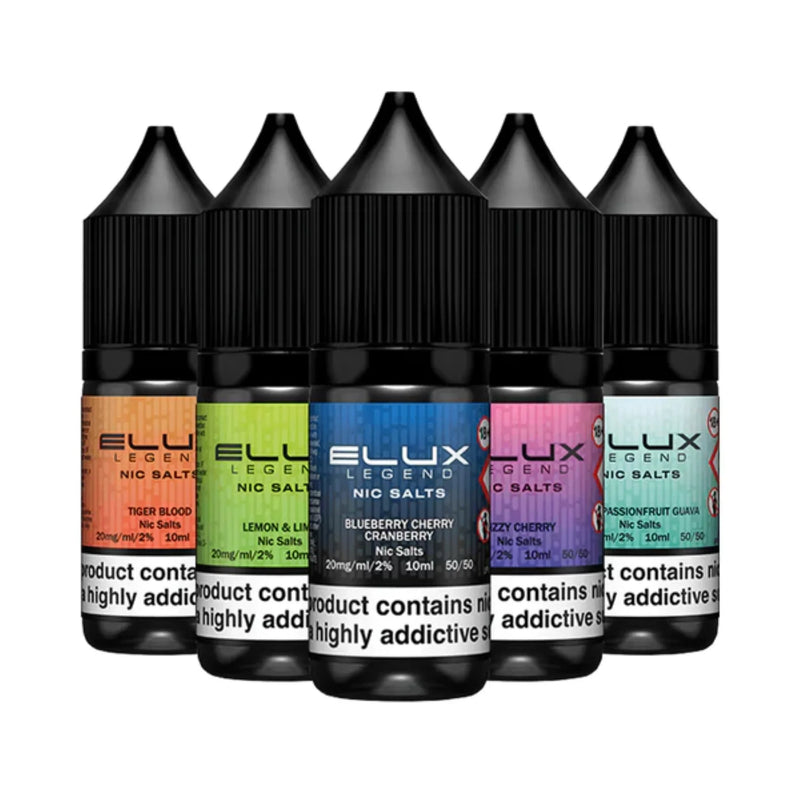
For best budget e-liquids, nicotine salts describe a formulation, not a price guarantee. Products often use compact bottles and appear in low-powered pod discussions. Concentration labels such as 10 mg/ml and 20 mg/ml describe nicotine content. Those concentrations do not establish the product's health suitability for any individual. Nicotine remains addictive.
Best budget e-liquids lists sometimes group every salt formulation together. How do freebase nicotine liquids differ?
Freebase nicotine is another nicotine formulation. A freebase label does not automatically mean cheaper production, safer inhalation or lower monthly spending. Labels can show 3 mg/ml, 6 mg/ml or 12 mg/ml, depending on the formulation. You should check the manufacturer's device guidance rather than assume every liquid fits every coil.
Best budget e-liquids comparisons should separate concentration from the price per millilitre. Otherwise, readers can mistake nicotine quantity for liquid volume.
Why do shortfills require careful cost calculations?
Shortfills contain spare bottle capacity and commonly arrive without nicotine. For example, a 50 ml (1.69 fl oz) fill can occupy a larger container. The advertised container size must not replace the actual liquid volume in your calculation. Any additional liquid changes the total volume and composition.
Some older guides claim nicotine-free shortfills face no vaping duty. HMRC's October 2026 rules contradict that broad claim for liquids intended for vaping. Best budget e-liquids comparisons must apply the same volume-based tax principle across covered formats.
How do VG and PG ratios affect practical value?
Vegetable glycerine (VG) and propylene glycol (PG) influence liquid thickness and device operation. A 50/50 formulation contains equal stated proportions of the 2 base ingredients. A 70/30 VG/PG formulation contains more vegetable glycerine. Device makers set compatibility requirements for coils and filling systems.
What happens when liquid thickness mismatches the device?
A poor viscosity match can affect wicking and lead to wasted liquid. A small pod coil may struggle with an unusually thick formulation. A different setup can leak with unsuitable thin liquid. Neither outcome proves a product is defective. Start by reading the device's documented compatibility information.
Best budget e-liquids comparisons that omit VG/PG ratios miss the cost of avoidable replacements. You can review the PG and VG guide for a technical explanation of both ingredients. Do not assume a higher VG percentage indicates higher quality.
Why are flavour and colour weak quality signals?
Flavour descriptions cannot establish safety or manufacturing quality. Strawberry, mint and tobacco labels describe sensory categories, not laboratory findings. Bright packaging also cannot prove lawful notification. Concentrated sweetness can affect residue in some coils, but actual effects depend on formulation and operating conditions.
When documenting best budget e-liquids, record ingredients and published product information. Avoid treating consumer popularity as independent evidence of chemical purity.
How to calculate e-liquid cost per millilitre accurately
To calculate e-liquid cost per millilitre, divide the full payable amount by the liquid volume. Use pounds for the price and millilitres for volume. Convert the answer into pence if clearer. Calculate a second total for weekly consumption only after choosing a realistic usage scenario.
For example, £6.00 divided by 10 ml (0.34 fl oz) equals 60p per millilitre. At 2 ml (0.07 fl oz) daily, 30 days require 60 ml (2.03 fl oz). The hypothetical liquid expense becomes £36.00 before accessories or device replacements. No product recommendation follows from the calculation.
How to compare a multi-bottle claim with one bottle
To compare a multi-bottle claim, calculate the payable bundle total and divide by its total liquid volume. A hypothetical 3-bottle pack costs £15.00 for 30 ml (1.01 fl oz). The resulting price is 50p per millilitre. Check whether delivery charges or minimum-order conditions alter that figure.
A banner showing 'save 40%' lacks context without the normal reference price. Best budget e-liquids research should preserve dated screenshots or written observations rather than assume discount percentages remain stable.
How to estimate the additional cost of consumables
To estimate accessory costs, add measured coil and pod replacement spending to the liquid budget. A hypothetical £8.00 monthly coil expense increases a £36.00 liquid example to £44.00. Battery replacement and electricity are separate line items. The estimate is illustrative rather than a universal ownership cost.
The table below gives an audit routine. Best budget e-liquids comparisons should use one consistent period, such as 30 days, for every scenario.
|
Task |
Timing |
Method |
Difficulty |
|
Read the label |
Before comparison |
Record actual fill volume, strength and VG/PG |
Easy |
|
Verify UK status |
Before reliance |
Check warnings and MHRA notification information |
Moderate |
|
Calculate unit cost |
At each price check |
Divide final charge by supplied millilitres |
Easy |
|
Model usage |
After 7 days |
Use a measured daily average over 30 days |
Moderate |
|
Review prices |
Monthly |
Date each observation and account for duty |
Easy |
Which UK legal checks matter before evaluating low prices?
A compliant UK nicotine refill follows legal limits for bottle volume and nicotine strength. The Medicines and Healthcare products Regulatory Agency (MHRA) sets a 10 ml (0.34 fl oz) nicotine refill-container limit. Nicotine strength cannot exceed 20 mg/ml. Nicotine-containing tanks and pods face a separate 2 ml (0.07 fl oz) limit.
Manufacturers must meet applicable notification, labelling and safety requirements. The presence of a listing does not mean the MHRA endorses flavour or product quality. Best budget e-liquids cannot be evaluated responsibly through price alone.
What should a label and retailer description disclose?
Look for nicotine concentration, liquid volume, ingredients, warnings and identifiable manufacturer information. Inconsistent specifications deserve scrutiny. A product labelled 30 mg/ml exceeds the consumer nicotine limit for standard UK retail liquids. A nicotine-containing 100 ml (3.38 fl oz) refill bottle also conflicts with the standard container rule.
Regulations distinguish nicotine-free formats from nicotine-containing refill containers. Large nicotine-free shortfills can exist, but vaping duty still applies to covered liquid. Do not merge those separate legal questions.
How can adults check suspicious product information?
Use the MHRA's published notification information and current regulatory guidance. Match the precise item rather than relying on a similar brand name. Treat broken seals, incorrect warnings and implausible claims as reasons for further checks. Our spotting counterfeit vape products article explains common product-authenticity signals.
Best budget e-liquids reporting should distinguish verified non-compliance from an unproven suspicion. Never label a particular brand counterfeit without reliable evidence.
Why can apparently cheap e-liquid claims mislead readers?
Best budget e-liquids rankings often omit dates, duties, delivery fees and actual volume. An August list can remain online after an October policy change. Price cards can also mix promotional bundles with single-bottle prices. Such comparisons measure unlike conditions unless editors clearly explain assumptions.
Which 3 claims require extra scrutiny?
Check tax exemptions, universal savings and unverified safety claims. First, nicotine-free vaping liquid does not automatically avoid the new duty. Second, a low unit price does not prove a low monthly cost. Third, a 'premium' or 'laboratory-tested' description is not sufficient evidence without scope and documentation.
Best budget e-liquids publishers should separate observations from conclusions. Record who supplied the information, the publication date and any unresolved discrepancy. That approach gives readers usable context without promotional rankings.
Does a brand name establish better value?
No. Brand recognition alone does not prove value or compliance. Riot Squad, Elfliq and Dinner Lady appear frequently in UK comparison content. Their inclusion shows market visibility rather than an independent safety rating. The same principle applies to lesser-known labels.
Best budget e-liquids should be evaluated through documented attributes. Editorial rankings become less reliable when commercial placement or affiliate arrangements remain undisclosed.
What does a realistic monthly e-liquid budget include?
Monthly budgets need separate entries for liquid, consumables and occasional device maintenance. Track actual expenditure before calculating a monthly average. A calendar month is not always exactly 4 weeks. Use a consistent 30-day model for simple comparisons.
An illustrative adult uses 2 ml (0.07 fl oz) daily. Monthly consumption reaches 60 ml (2.03 fl oz). At a hypothetical 55p per millilitre, liquid costs £33.00. Another £7.00 of coil expenditure brings the total to £40.00. Different use patterns change every figure.
How should 2026 budget guides handle duty-inclusive prices?
Use the observed checkout price whenever available. Apply government duty rates only when modelling hypothetical tax liability. HMRC's £2.20 per 10 ml (0.34 fl oz) charge does not prove any fixed retail margin. Retail stock produced before the duty also complicates simple comparisons.
Consult HMRC's published guidance for exact duty liability. Best budget e-liquids information remains useful only when the pricing assumptions stay visible.
Why should health considerations remain separate from price?
Nicotine dependence and health effects cannot be reduced to a price score. The National Health Service (NHS) states that vaping is less harmful than smoking but carries risks. Children and non-smokers should never vape. Adult smokers can seek support through NHS stop-smoking services.
What should readers remember about best budget e-liquids in 2026?
Compare documented costs, legal status and device fit before accepting a value claim. The October 2026 duty applies by liquid volume, including covered nicotine-free products. Nicotine concentration and packaging rules still operate separately. Date-stamped pricing and clear assumptions matter more than a promotional 'top 10' ranking.
Frequently asked questions about budget e-liquids
Are best budget e-liquids always the cheapest per bottle?
No. Bottle size, liquid volume, recurring consumption and additional fees change the comparable cost. Calculate pence per millilitre first.
Does the 2026 UK duty apply to nicotine-free shortfills?
Yes, when the liquid meets the legal vaping-product definition. The duty rate is £2.20 per 10 ml (0.34 fl oz).
Can nicotine refill bottles exceed 10 ml in the UK?
No, not under standard consumer e-liquid rules. Nicotine-containing refill containers have a 10 ml (0.34 fl oz) limit.
Does a 50/50 VG/PG ratio suit every vape device?
No. Check the device manufacturer's compatibility instructions. Coil design and recommended liquid thickness vary.
Is vaping harmless when a liquid contains no nicotine?
No. Nicotine-free vaping removes nicotine exposure but does not establish that inhaling aerosol carries no risk.
Final guidance: how should you assess e-liquid value?
Use a dated, duty-aware price calculation and check lawful product information. Best budget e-liquids are not identifiable through marketing claims alone. Compare actual volume, technical compatibility and ongoing use without treating price as a health benefit. For a dated cost explanation, read our vape tax and pricing guide. Consult NHS and MHRA guidance before assessing health claims.